10.03.2024
Expo Albania is envisioned as a vibrant, youth-oriented cultural and exhibition complex, conceived as a new civic landmark for Tirana. Designed as a platform for creativity, exchange, and innovation, the project proposes a large-scale, flexible environment capable of hosting exhibitions, performances, cultural events, technological fairs, and public gatherings. The proposal positions Expo Albania not as an isolated object, but as an integral part of the city’s evolving urban and territorial fabric, acting as a bridge between metropolitan infrastructure, surrounding neighbourhoods, and Albania’s broader cultural landscape.
OUD+Architects collaborated with EMBT – Benedetta Tagliabue as lead designers, artist Adrien Vescovi, set designer Alex Ollé, Illyrian Consulting Engineers, and Arch Gate as estimators, forming a multidisciplinary team that combined architectural design, artistic research, scenography, and technical expertise.
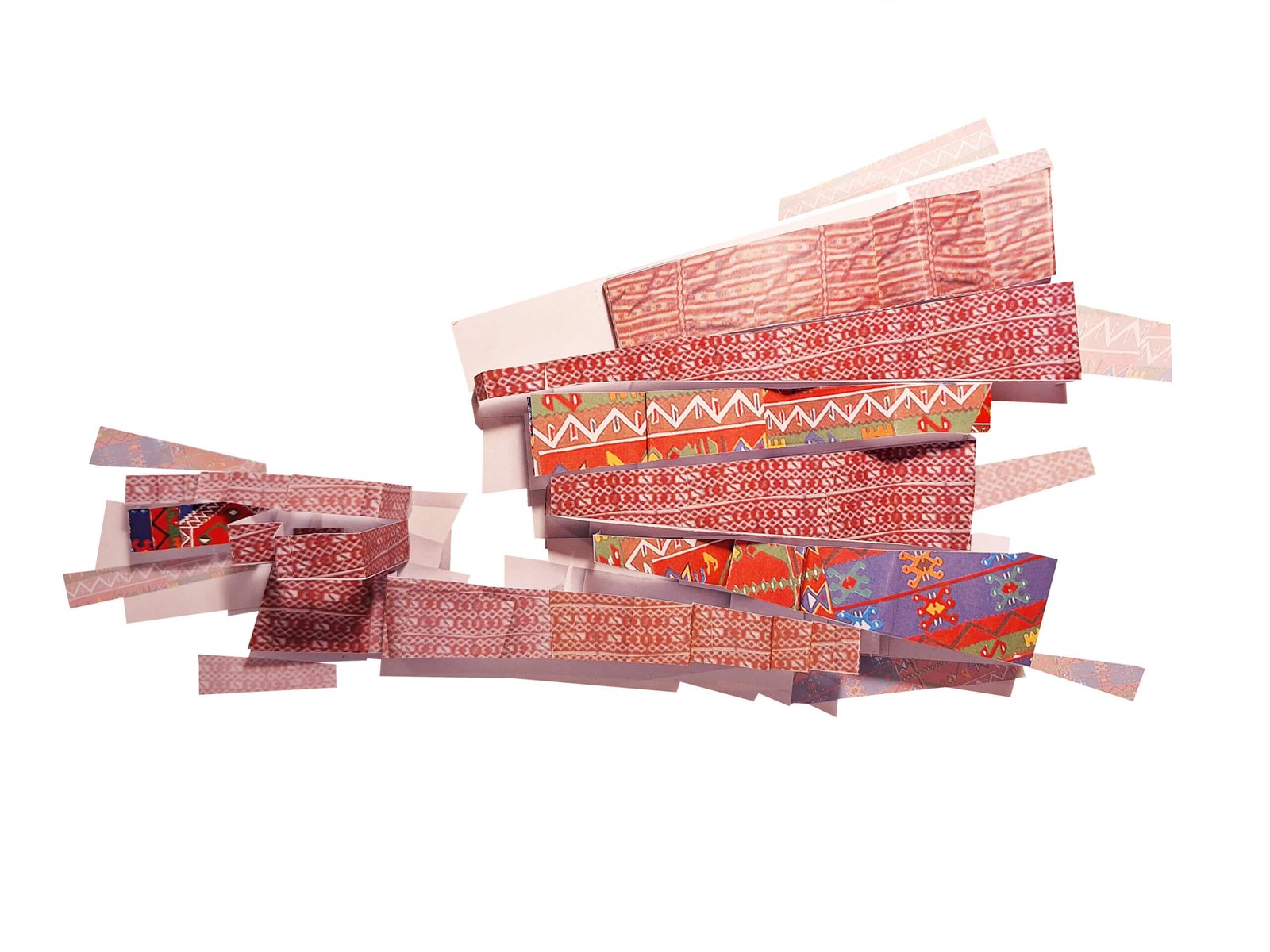
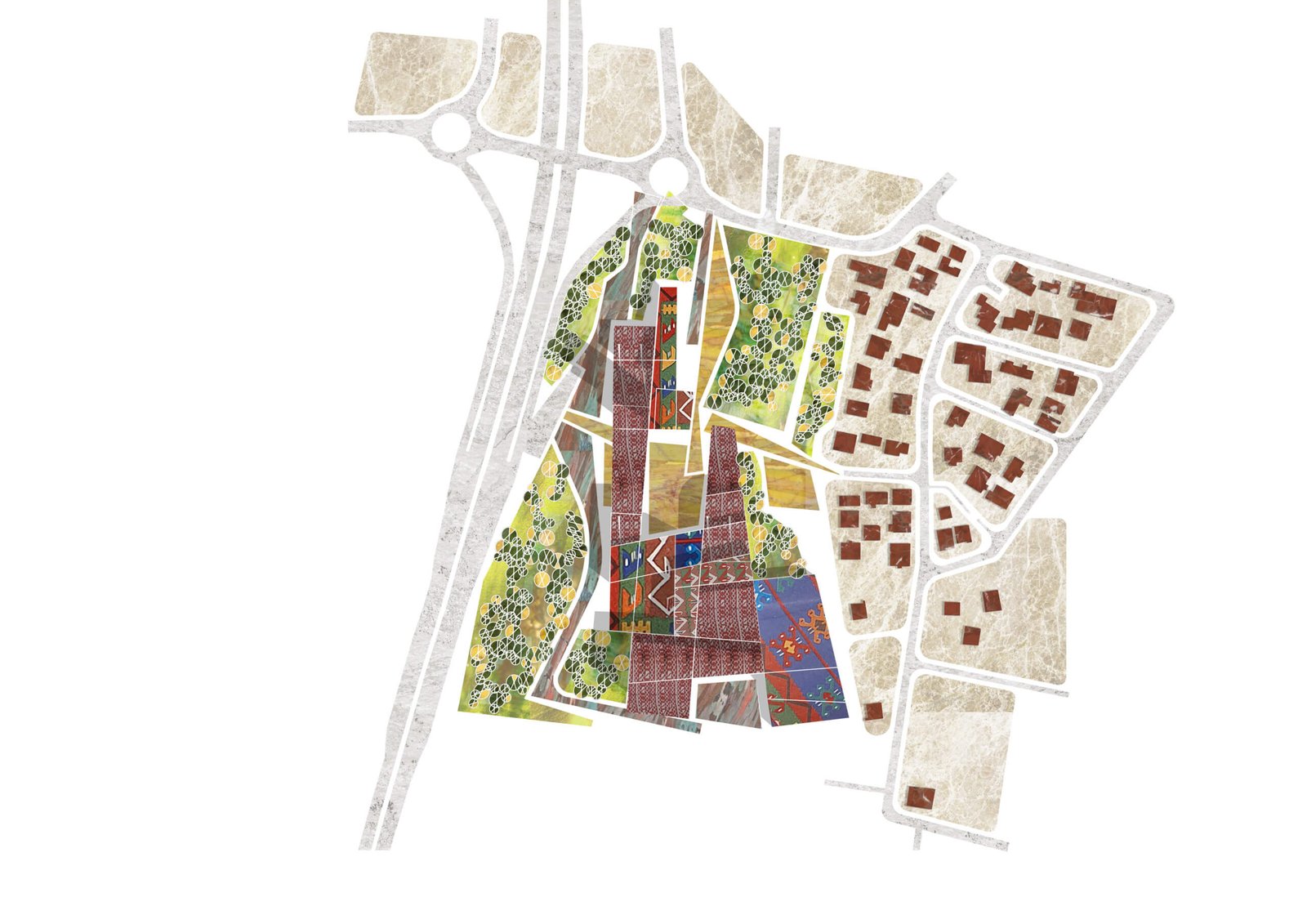
The conceptual foundation of Expo Albania draws deeply from Albanian cultural identity. The design is inspired by the richness of traditional Albanian textiles and garments, whose layered fabrics, ornamental patterns, and dynamic movement become a generative architectural language. This cultural reading is reinforced by the poetic descriptions of Albania written by Lord Byron in Childe Harold’s Pilgrimage, as well as the iconic portrait painted by Thomas Phillips in 1809, which together contributed to shaping a European imagination of Albanian dress and craftsmanship.
Rather than literal representation, these references are translated into architectural form through organic geometries, sinuous volumes, and fluid spatial sequences. Buildings are conceived as if shaped by the motion of swirling skirts or unfolding textiles, capturing a sense of movement frozen in time. The resulting architecture expresses both familiarity and transformation—rooted in heritage, yet oriented toward innovation and contemporary expression.
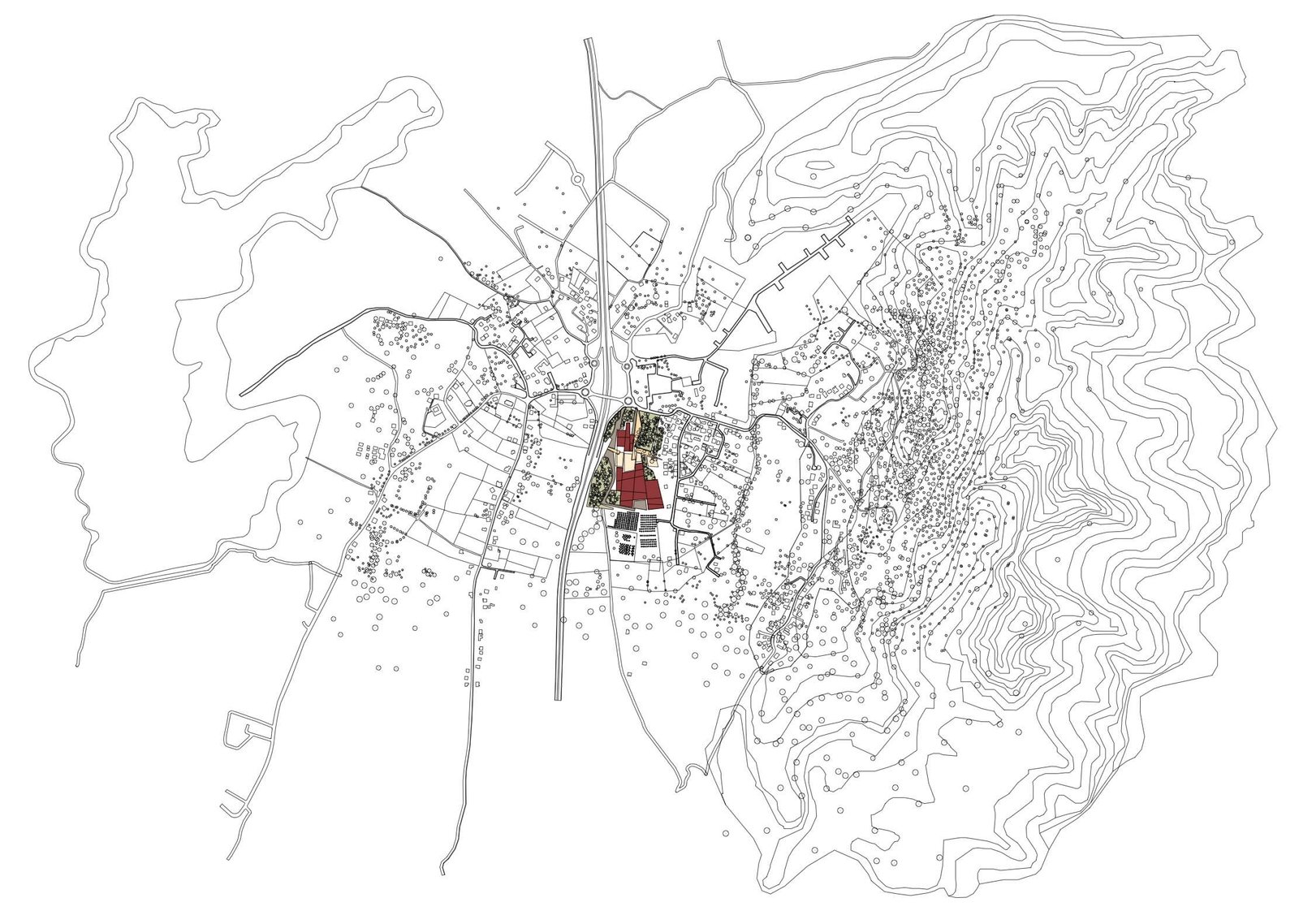
The project site benefits from a highly strategic position within the metropolitan territory of Tirana. Located approximately 7.5 km from the city centre, 30 km from the international airport, and under 50 km from the Adriatic coast, the plot is exceptionally well connected by highway and secondary road networks. This accessibility positions Expo Albania as a regional destination, capable of attracting local, national, and international visitors.
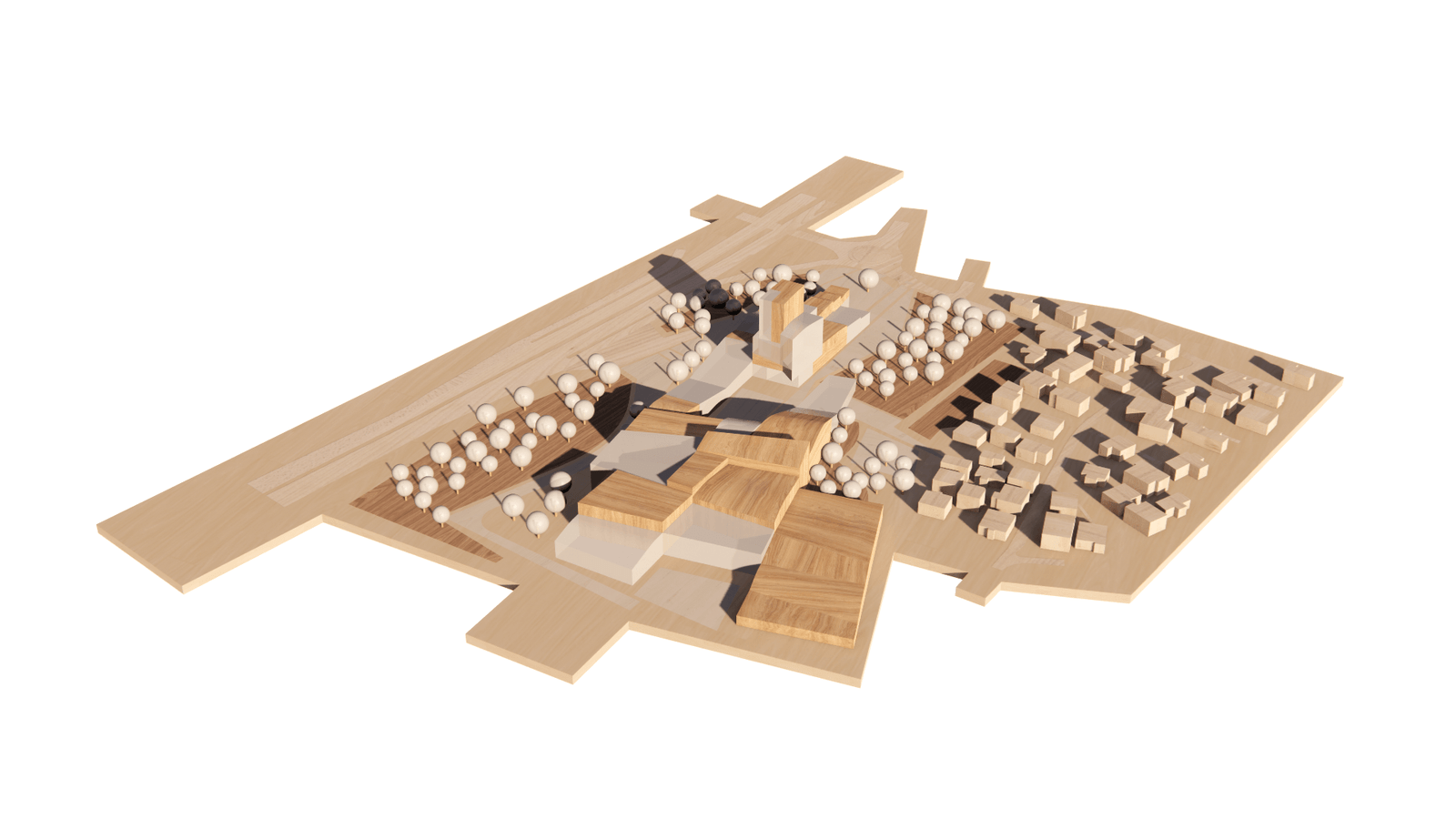
The proposal carefully responds to its context, situated between major infrastructure and a more rural, low-density environment. Expo Albania is conceived as a transitional landscape, mediating between urban intensity and natural surroundings, and transforming the site into a connective civic territory rather than a single-use enclave.
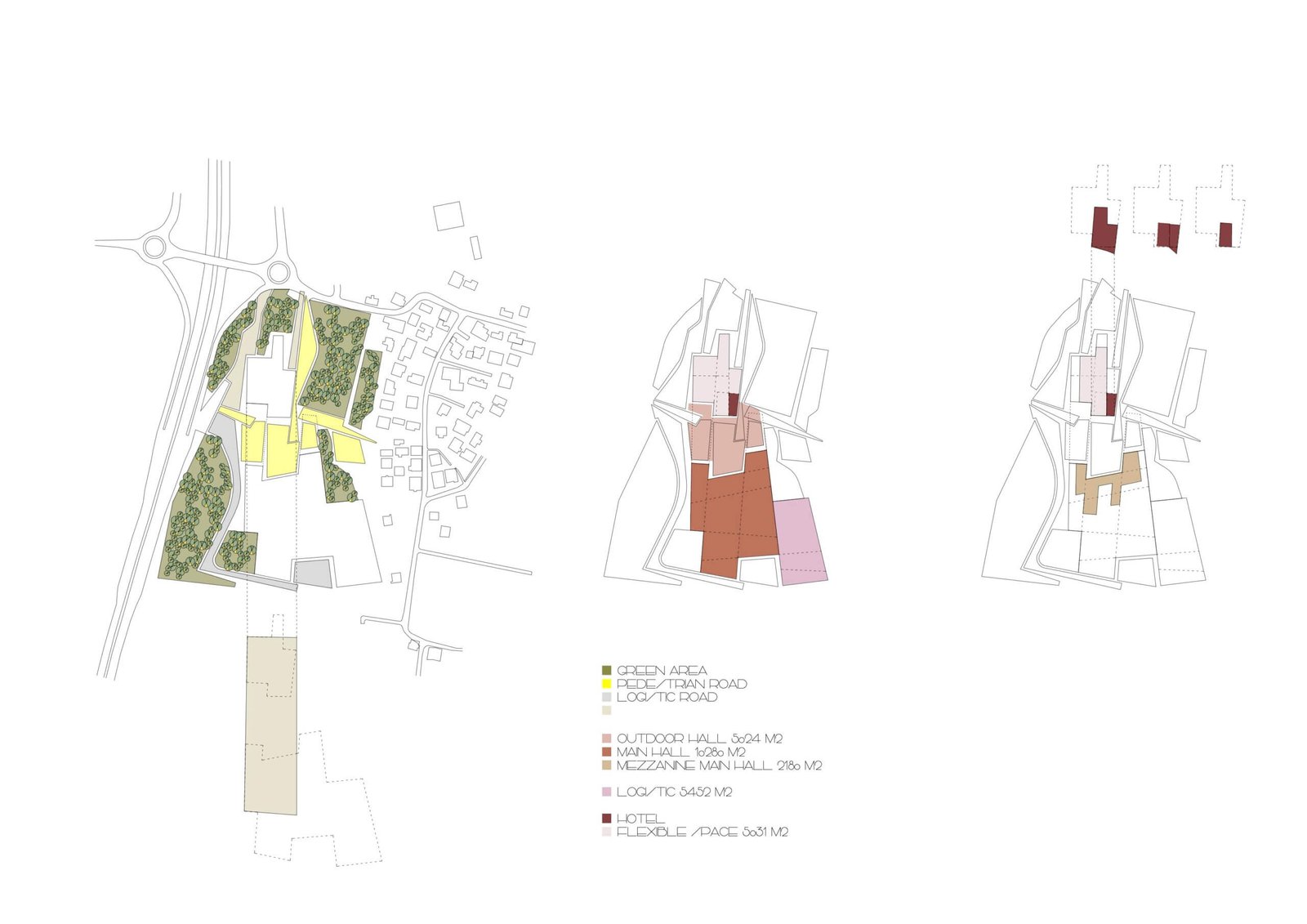
The masterplan is structured around a central public plaza, which functions as the heart of the complex. This plaza acts simultaneously as an outdoor exhibition space, a gathering point, and a distribution hub connecting all programmatic components. From this centre, the project unfolds through a system of interconnected green spaces, pedestrian paths, and smaller plazas, creating a porous and accessible environment with no rigid front or back façades.
Multiple access points—from the highway, secondary roads, and adjacent urban fabric—ensure inclusivity and ease of movement. This absence of façade hierarchy reinforces the civic character of the project, emphasizing openness, permeability, and democratic access.
Expo Albania is designed as a highly adaptable complex spanning approximately 42,200 m², accommodating a diverse and evolving program. Key components include:
A Main Exhibition Hall (approx. 10,000 m²) with generous heights and modular layouts
A Mezzanine Exhibition Level
Flexible multipurpose spaces for conferences, cultural events, and educational activities
Outdoor exhibition areas and plazas
Logistics and storage facilities
A hotel, conceived as a vertical landmark within the ensemble
The regularity of the plan and the modular organization allow spaces to be easily reconfigured, enabling exhibitors and users to adapt environments to different scales and formats—from art installations and performances to technology fairs, concerts, and international exhibitions.
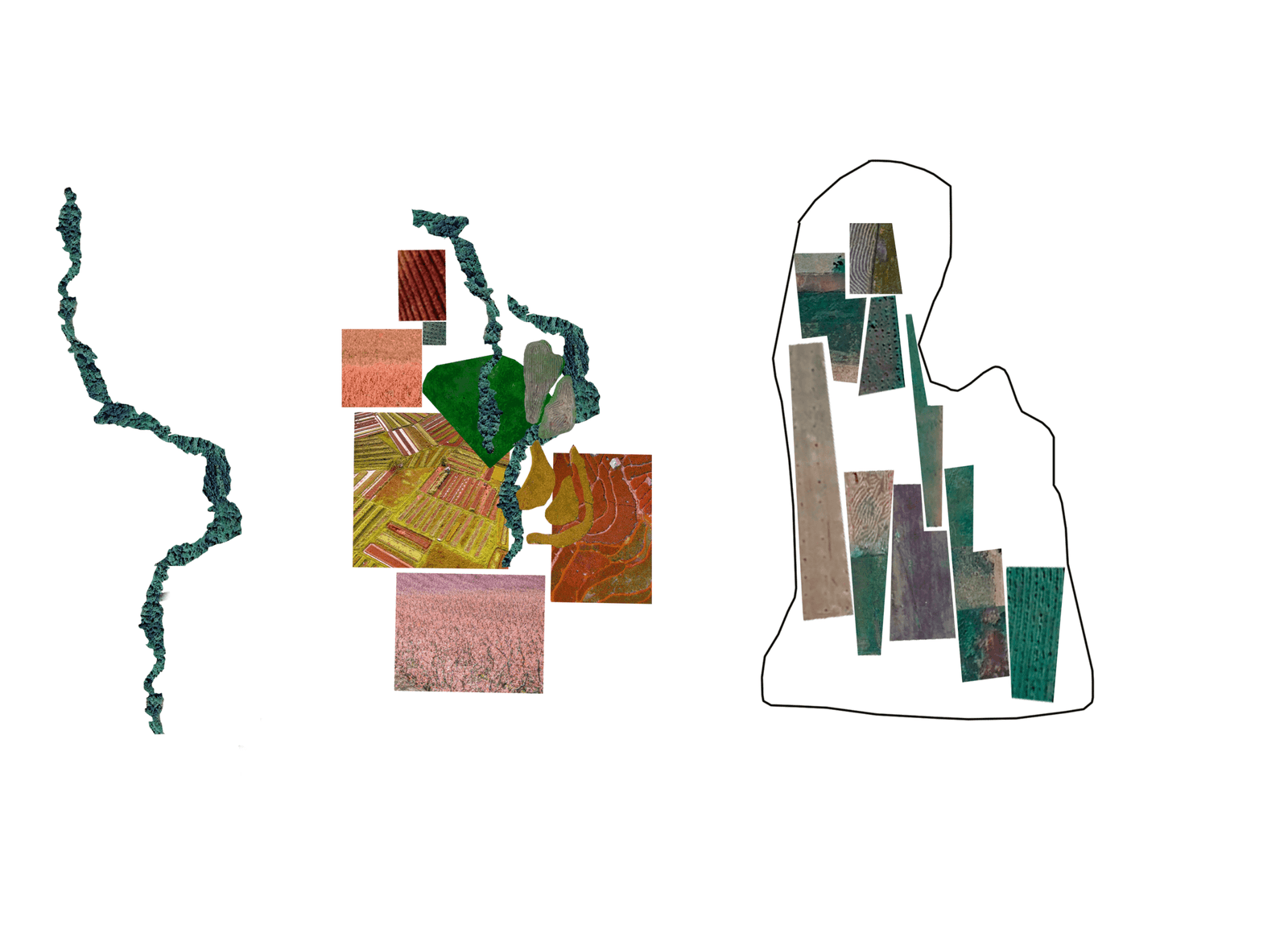
While the masterplan adopts a rational organizational logic, the architectural expression remains fluid and expressive. The volumetry is defined by sinuous, undulating forms, inspired by textile folds and Albania’s mountainous landscapes. Buildings appear as sculptural elements emerging from the ground, their shapes modulated by movement, rhythm, and variation.
Landscape design plays an essential role, with green areas and paved surfaces carefully interwoven to reinforce continuity between architecture and open space. The plaza system not only enhances environmental quality but also encourages social interaction, informal gatherings, and collective use beyond the duration of Expo events.
Expo Albania is conceived as more than an exhibition venue—it is envisioned as a long-term cultural and social catalyst. The project reflects Albania’s ambition to create new spaces that foster creativity, innovation, and international exchange through culture. By combining architectural experimentation, cultural storytelling, and urban connectivity, the proposal aspires to become a lasting reference point for Tirana and the wider region.
Through its openness, adaptability, and strong cultural grounding, Expo Albania proposes a contemporary model for large-scale civic architecture—one that celebrates identity while embracing transformation, and one that places youth, culture, and public life at its core.