15.06.2024
In collaboration with EMBT Architects, led by Benedetta Tagliabue, OUD+Architects, was shortlisted in the Dual International Concept Design Competition for the G1 sites in Tirana. Although the proposal was not selected as the winning entry, it was widely recognized and highly praised for its architectural vision, urban sensitivity, and environmental ambition—particularly within the Albanian architectural and cultural community.
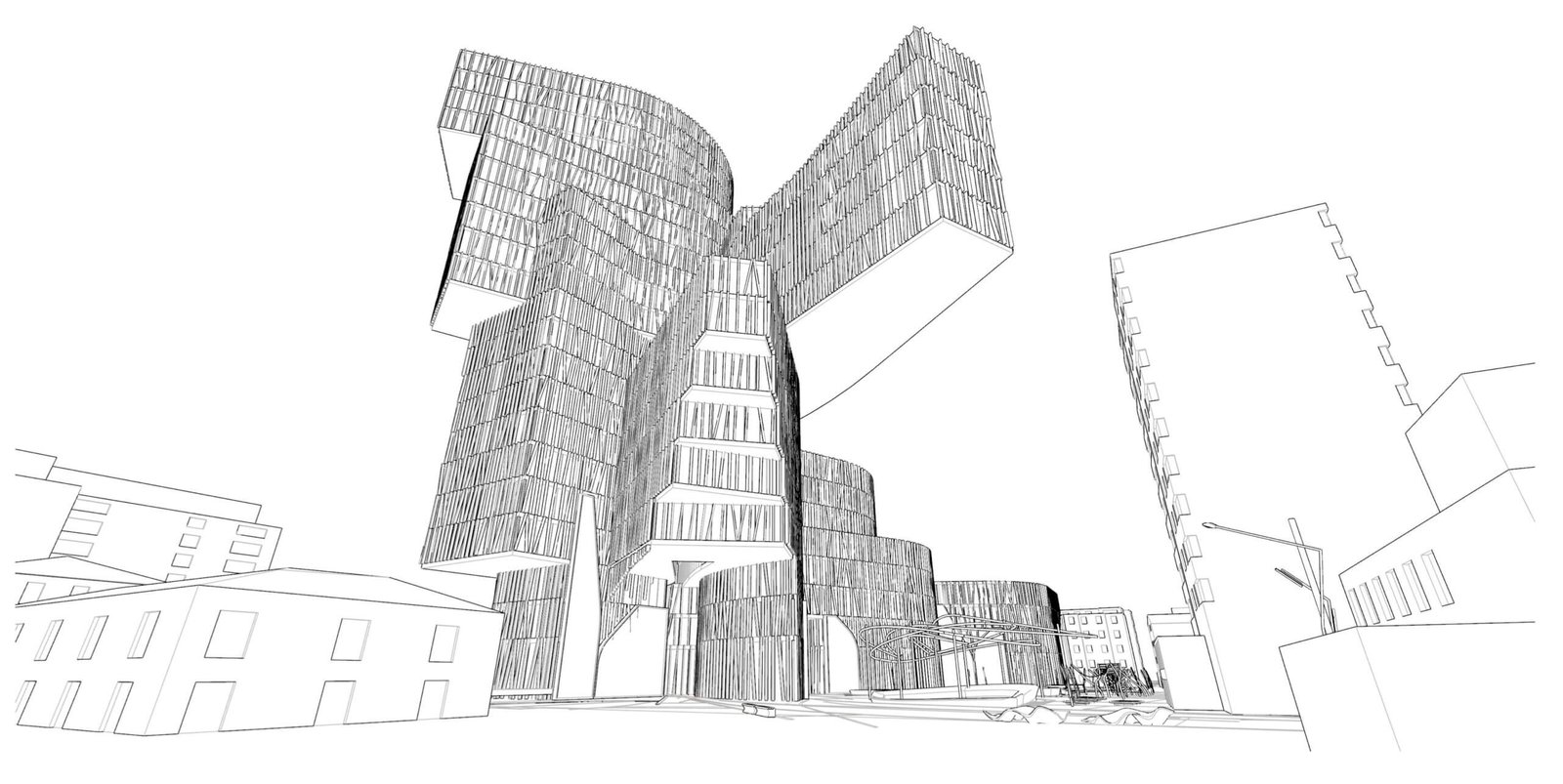
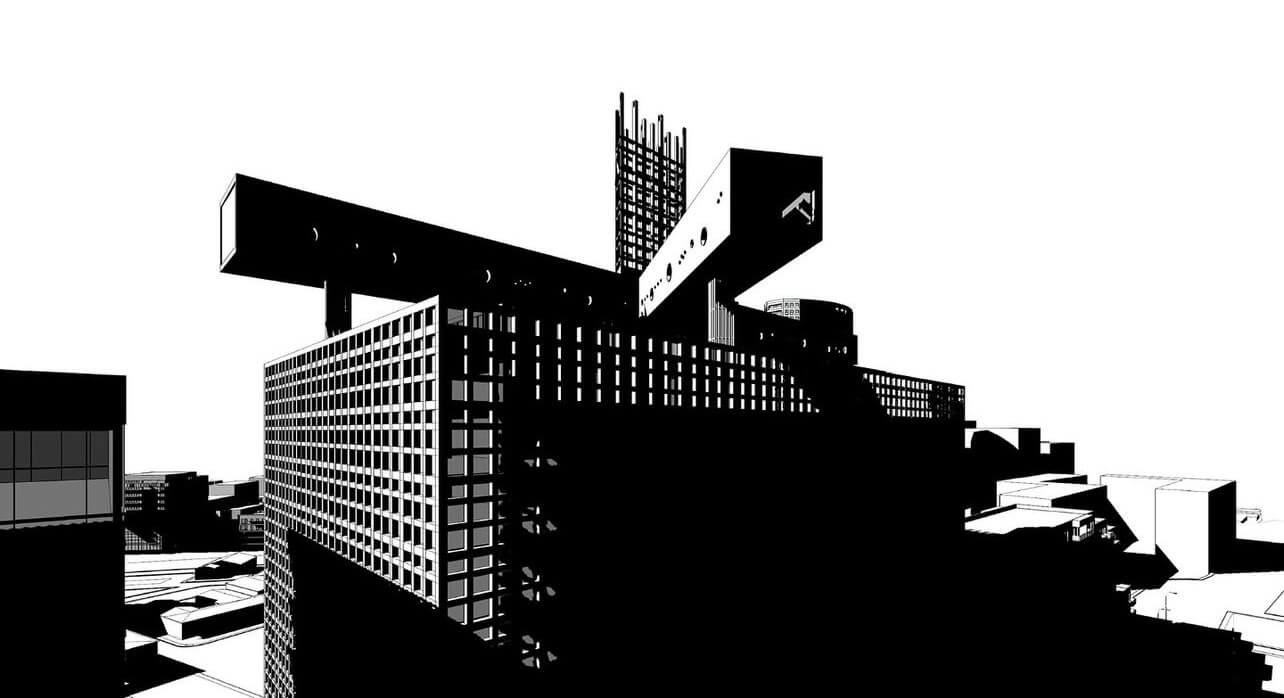
The proposal articulated a bold, future-oriented vision for Tirana as an emerging European capital, combining democratic governance, sustainable development, and vibrant urban life into a cohesive spatial strategy. Conceived as a dual-cluster system, the project integrates a Public Administration Cluster with a Mixed-Use Development Cluster, collectively redefining institutional architecture as an inclusive, civic, and environmentally responsible urban catalyst.
Urban Vision: A Dual-Cluster City Model
The project proposes two complementary urban clusters that respond to distinct yet interconnected roles within the city. Together, they establish a new model for governance, living, and economic activity—one that is transparent, accessible, and adaptable to future growth.
The Public Administration Cluster positions government architecture as an open civic landscape rather than a closed institutional enclave, while the Mixed-Use Development Cluster activates the city through residential, cultural, and commercial programs. This duality reflects a broader ambition: to align democratic institutions with everyday urban life, embedding governance within the lived experience of the city.
Public Administration Cluster
Democratic Governance as Civic Space
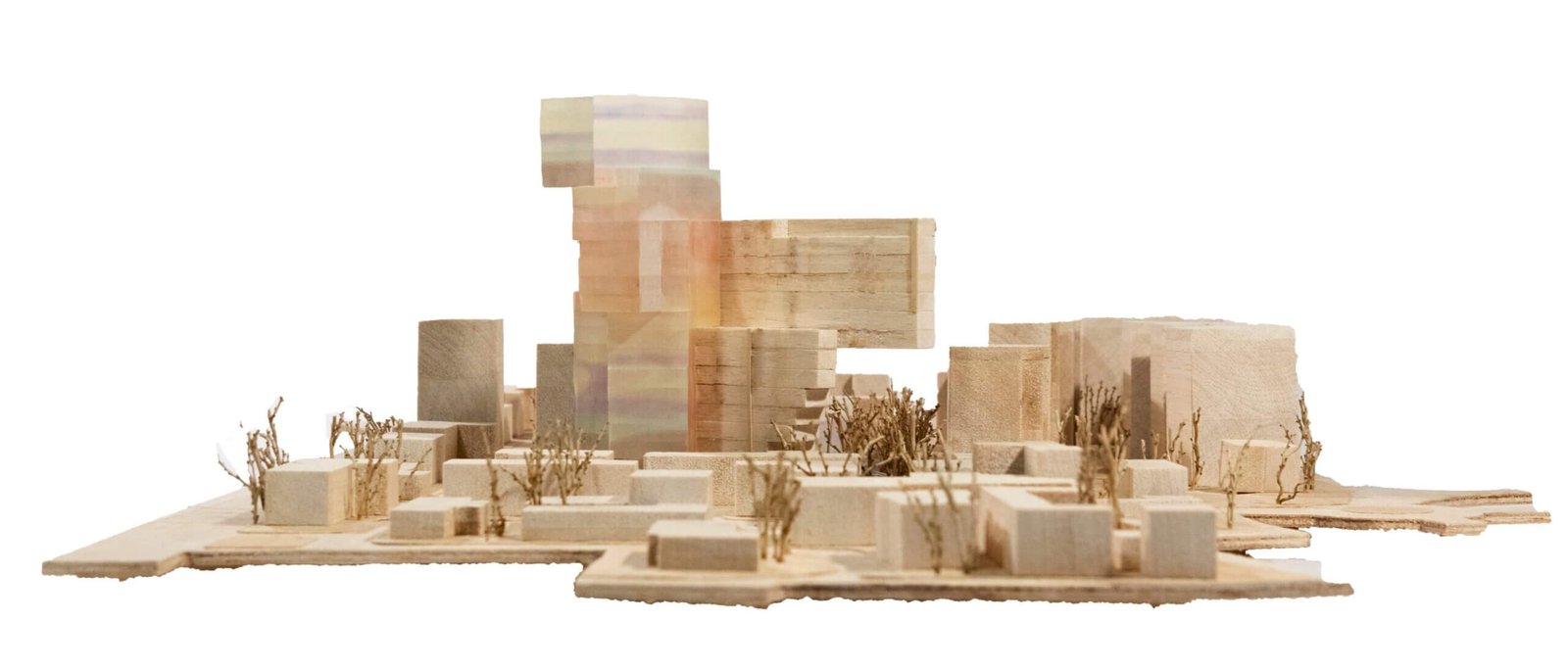
Located on a 9,400 m² site in the Komuna e Parisit area—formerly used as a state vehicle parking facility—the Public Administration Cluster transforms a car-dominated plot into a public-oriented institutional landscape. Strategically positioned approximately 1.8 km from Tirana’s center and near the main boulevard and Skanderbeg Square, the site offers both symbolic and functional visibility within the city.
At the heart of the cluster lies a central civic plaza, conceived as an open gathering space that fosters interaction between citizens and public institutions. This plaza is not merely a forecourt but an active democratic stage, reinforcing transparency, accessibility, and public engagement.
A green spine traverses the site, connecting buildings through a continuous landscaped corridor that enhances environmental performance while structuring pedestrian movement. The architectural language draws on organic forms, reflecting the fluidity and evolving nature of contemporary governance while resonating with Albania’s cultural identity.
Architecture, Materiality & Sustainability
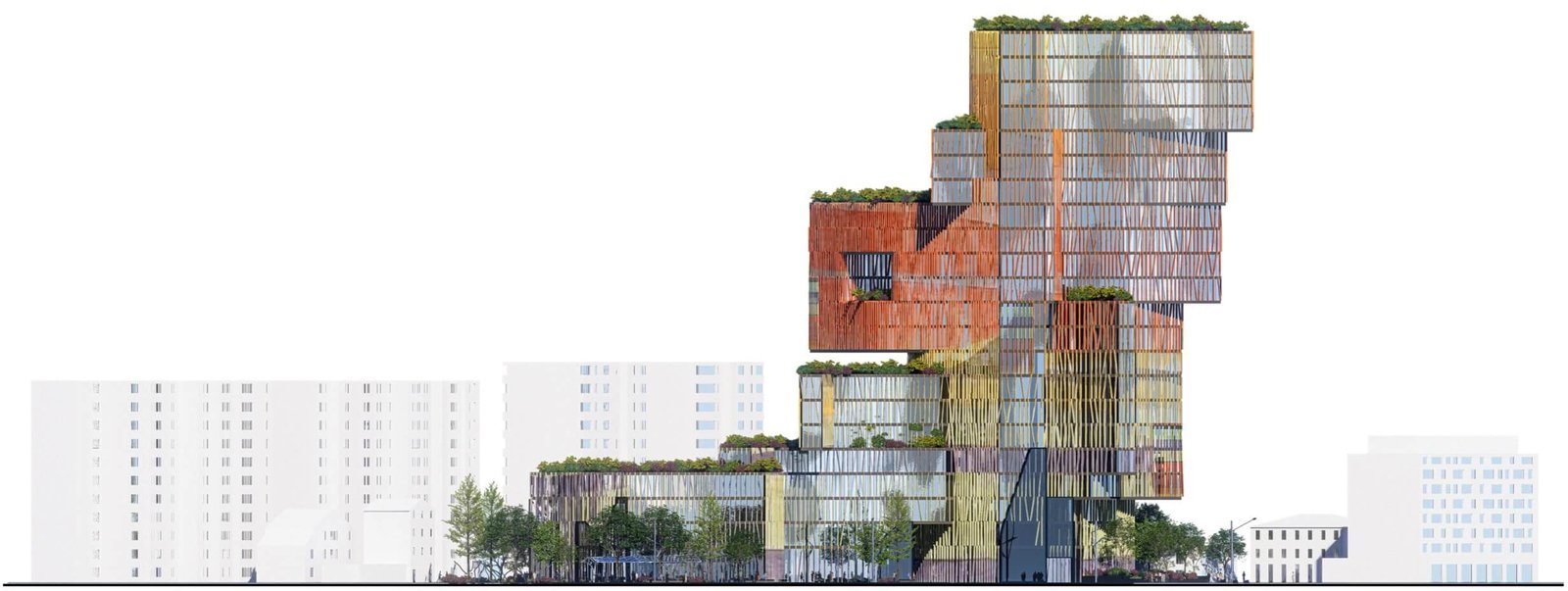
Sustainability is embedded as a core design principle across both clusters. The proposal emphasizes mass timber construction, reducing embodied carbon while introducing warmth, tactility, and human scale to large institutional buildings. Timber structures are paired with energy-efficient systems, green roofs, rainwater harvesting, and passive design strategies to ensure long-term environmental performance.
The architecture balances expressive form with functional clarity. Organic geometries are not decorative gestures but spatial devices that mediate light, movement, and social interaction. Interior spaces prioritize daylight, flexibility, and adaptability, supporting evolving administrative needs while enhancing the everyday experience of civil servants and visitors alike.
Functional Flexibility & Contemporary Work Models
The Public Administration Cluster is designed around flexible workplace typologies, accommodating diverse governmental entities through open-plan offices, shared workspaces, and modular configurations. These environments encourage collaboration, transparency, and efficiency while allowing future reconfiguration as institutional structures evolve.
Integrated amenities—including childcare facilities, wellness areas, and outdoor workspaces—support healthy work-life balance and reinforce the cluster’s role as a humane, people-centered workplace rather than a rigid bureaucratic environment.
Security, Mobility & Future-Proofing
Security requirements are carefully integrated into the architectural and landscape design, ensuring controlled access and secure zones without compromising openness or civic presence. Pedestrian paths, bicycle networks, and public transport connections prioritize sustainable mobility and safe access for all users.
Advanced technologies—smart building systems, digital communication platforms, and adaptable infrastructure—future-proof the complex, allowing for institutional growth, technological upgrades, and evolving governance models over time.
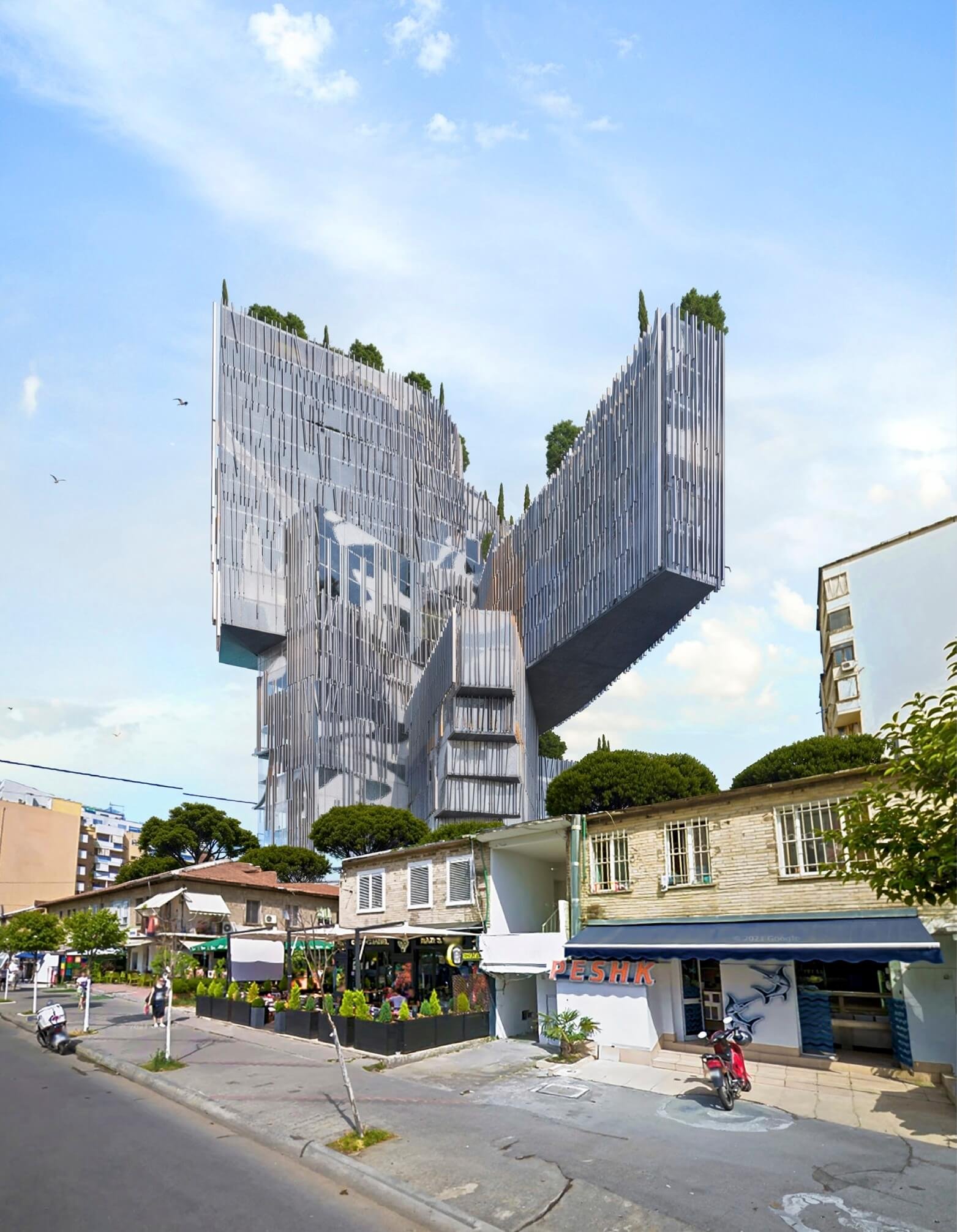
Mixed-Use Development Cluster
Urban Life, Culture & Economic Vitality
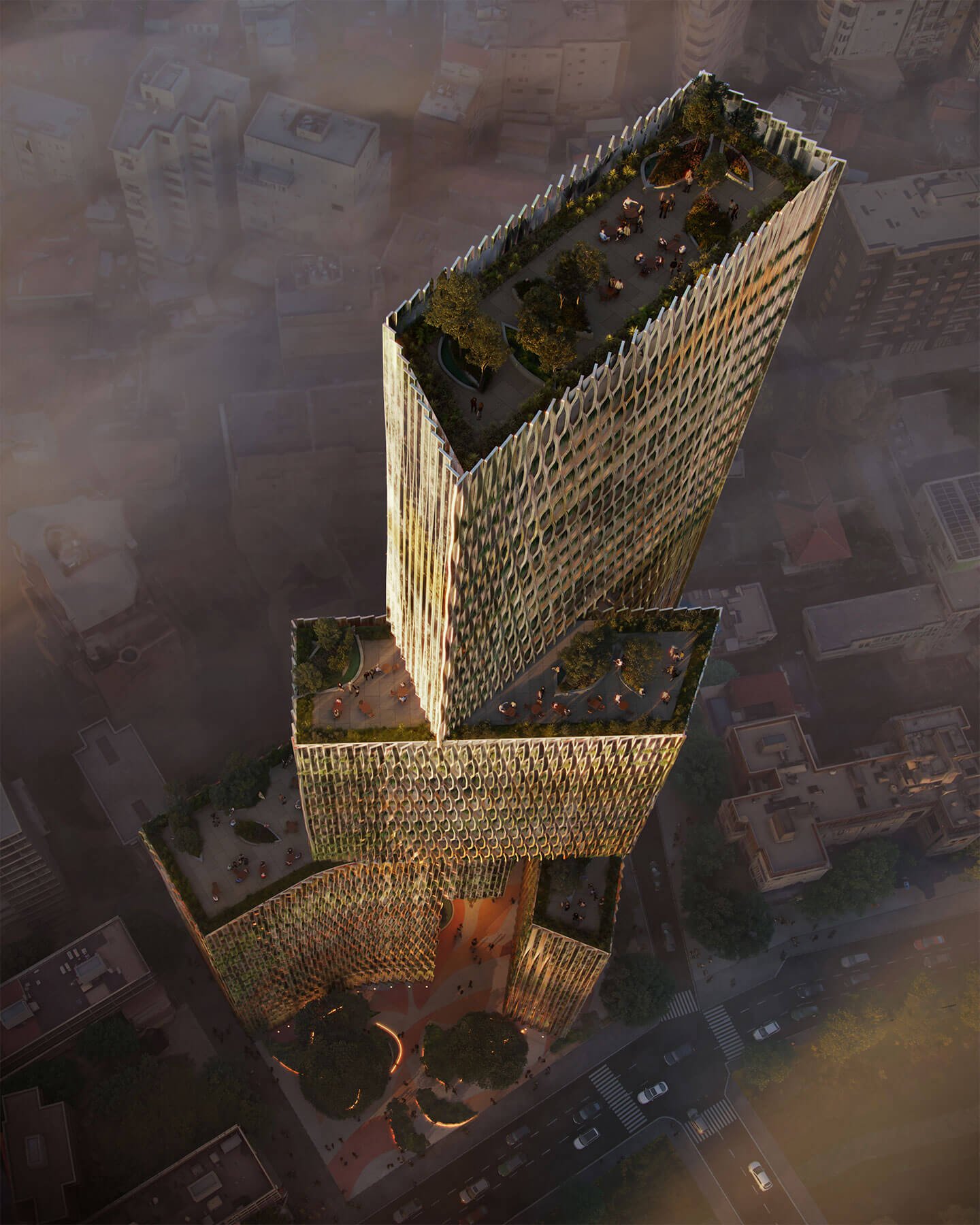
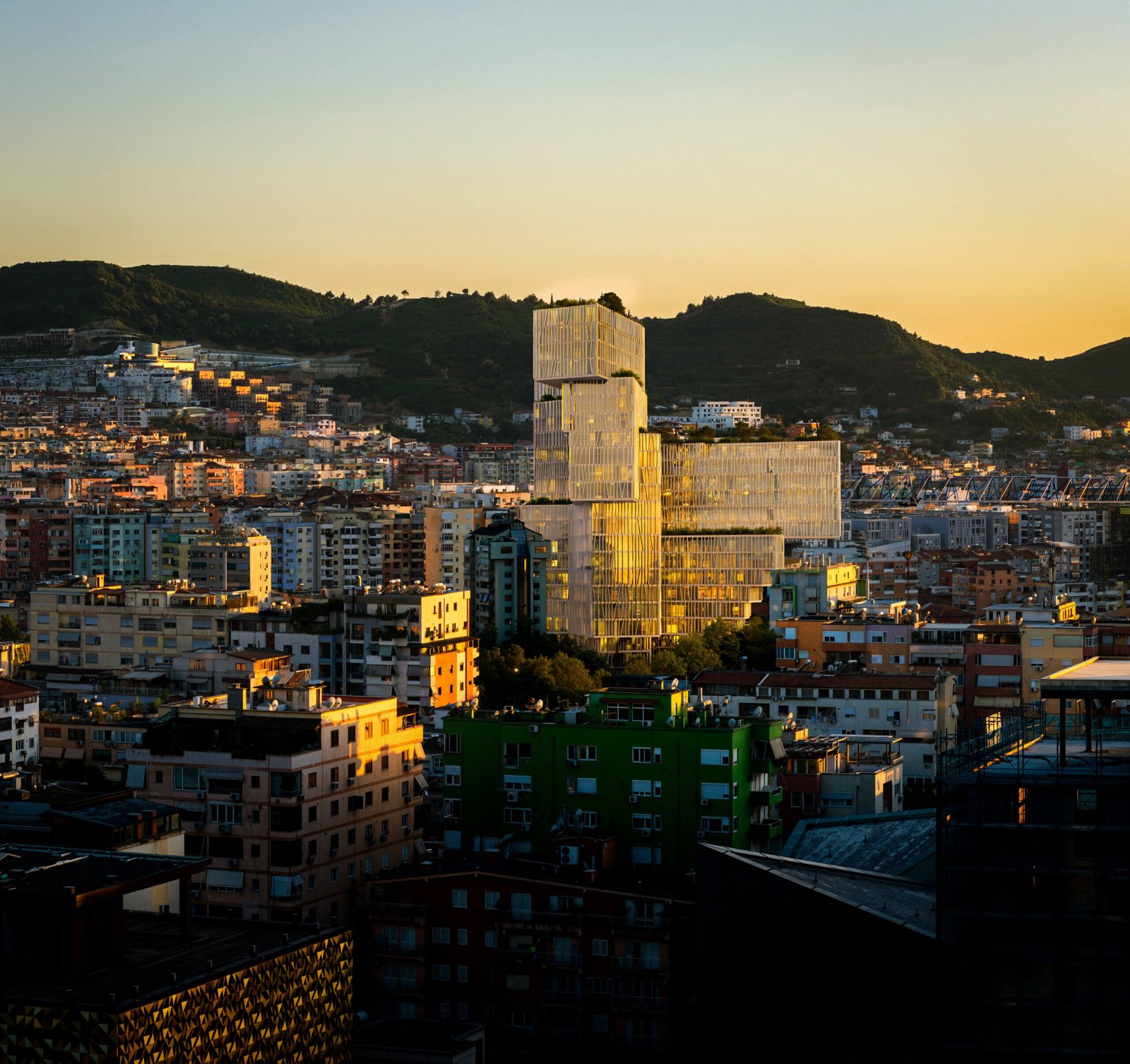
The Mixed-Use Development Cluster is located along Zhan D’Ark Boulevard on a 2,840 m² site, approximately 2 km from Tirana’s center and well connected to major transportation routes, the Lana River, and the historic New Bazaar area.
This cluster blends upscale residential, commercial, and cultural programs, creating a vibrant urban landmark that reinforces Tirana’s role as a regional hub. Retail spaces, cafés, restaurants, fitness facilities, and cultural venues activate the ground plane, while public spaces and landscaped areas encourage social interaction and community life.
As with the Public Administration Cluster, organic architectural forms and mass timber construction define the project’s identity, ensuring continuity across the two sites while responding to their distinct urban contexts.
Environmental Resilience & Smart Urbanism
The Mixed-Use Cluster continues the project’s commitment to sustainability through green infrastructure, energy-efficient systems, and resilient design strategies. Smart technologies—ranging from building management systems to integrated mobility solutions—enhance performance, adaptability, and long-term viability.
Together, the two clusters establish a comprehensive approach to sustainable urban development, aligning environmental responsibility with economic growth and cultural vitality.
Recognition & Legacy
Although not selected as the winning proposal, the EMBT + OUD+ submission was recognized for its architectural quality, conceptual clarity, and visionary approach to Tirana’s future. The project sparked significant interest and discussion within Albania’s architectural community, standing out for its humane interpretation of institutional architecture, its integration of landscape and civic space, and its strong environmental agenda.
The proposal remains a compelling reference for contemporary public architecture in the region—demonstrating how governance, culture, and everyday urban life can be woven into a cohesive, sustainable, and forward-looking city model.