11.09.2021
OUD+Architects, in collaboration with Enota, won the international competition for the Prishtina Sports Hall, conceived not as an isolated object, but as a spatial intervention embedded within the city’s existing infrastructural and social patterns.
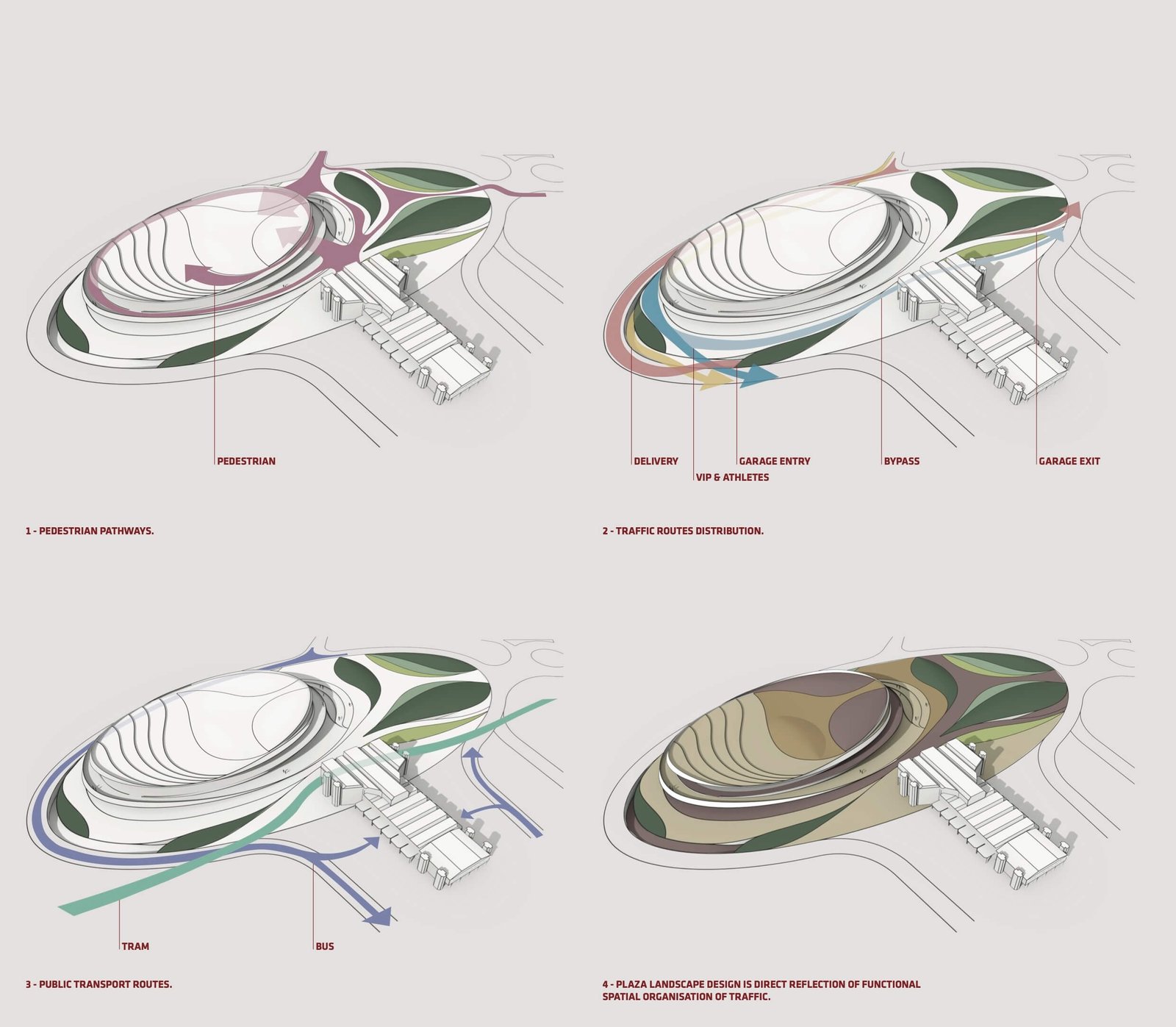
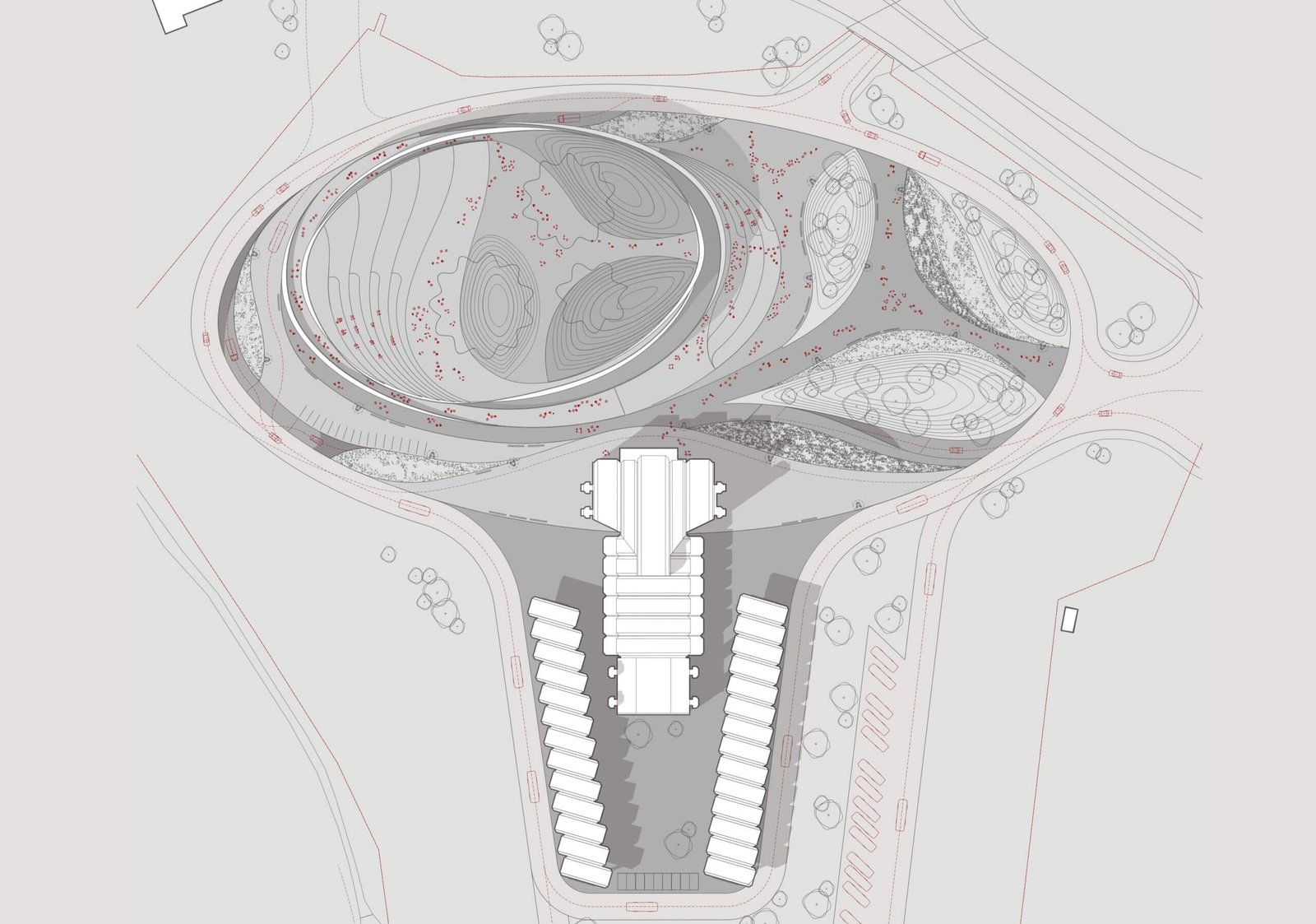
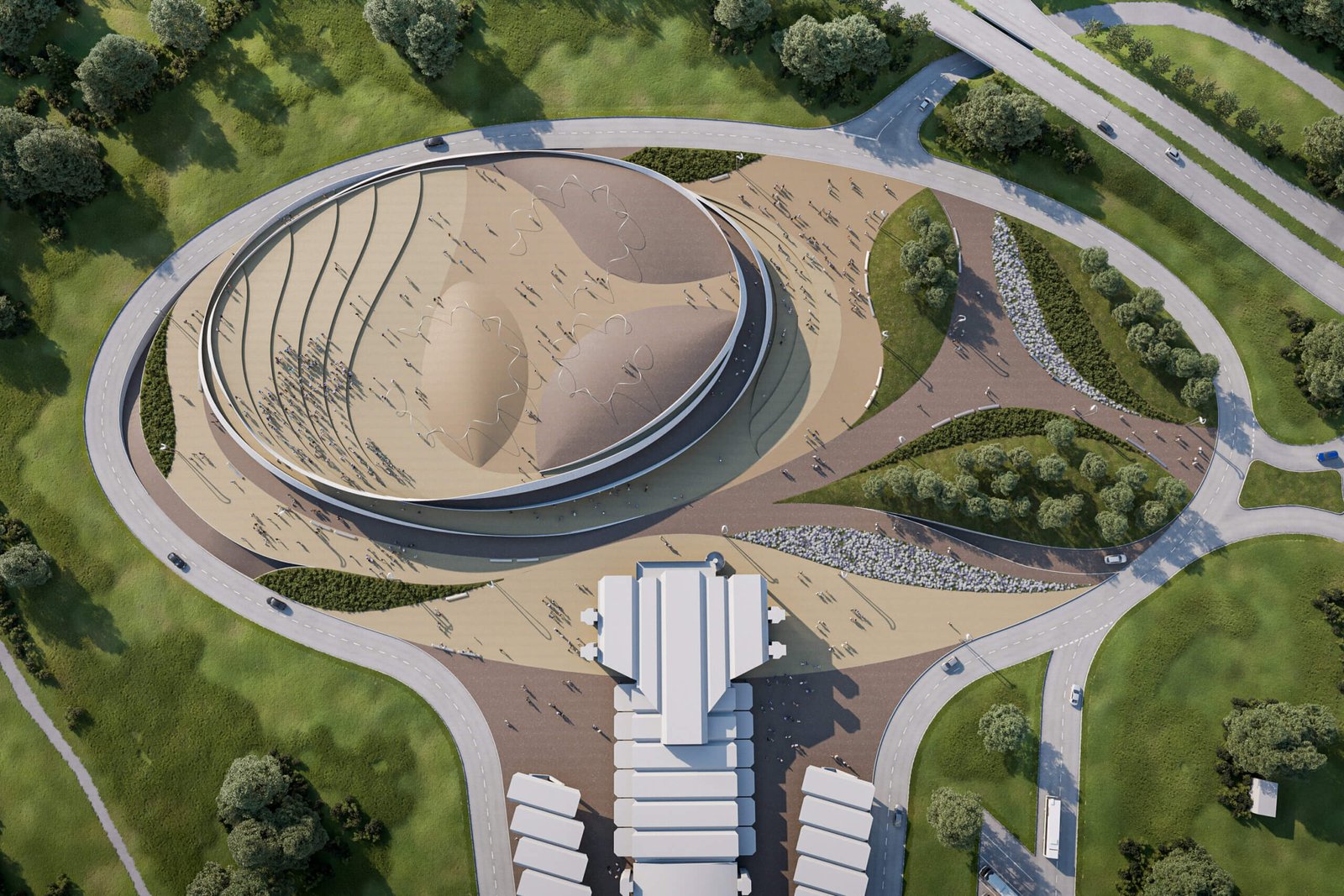
The project takes as its point of departure the elliptical traffic loop surrounding the bus station—an infrastructural figure that defines the site and structures movement at the urban scale. Rather than opposing this geometry, the sports hall is positioned within the ellipse, reinforcing the bus station as the organizational center and allowing the building to emerge from the logic of circulation, flows, and trajectories that already shape the area. Architecture here is understood as a continuation of movement rather than a static form.
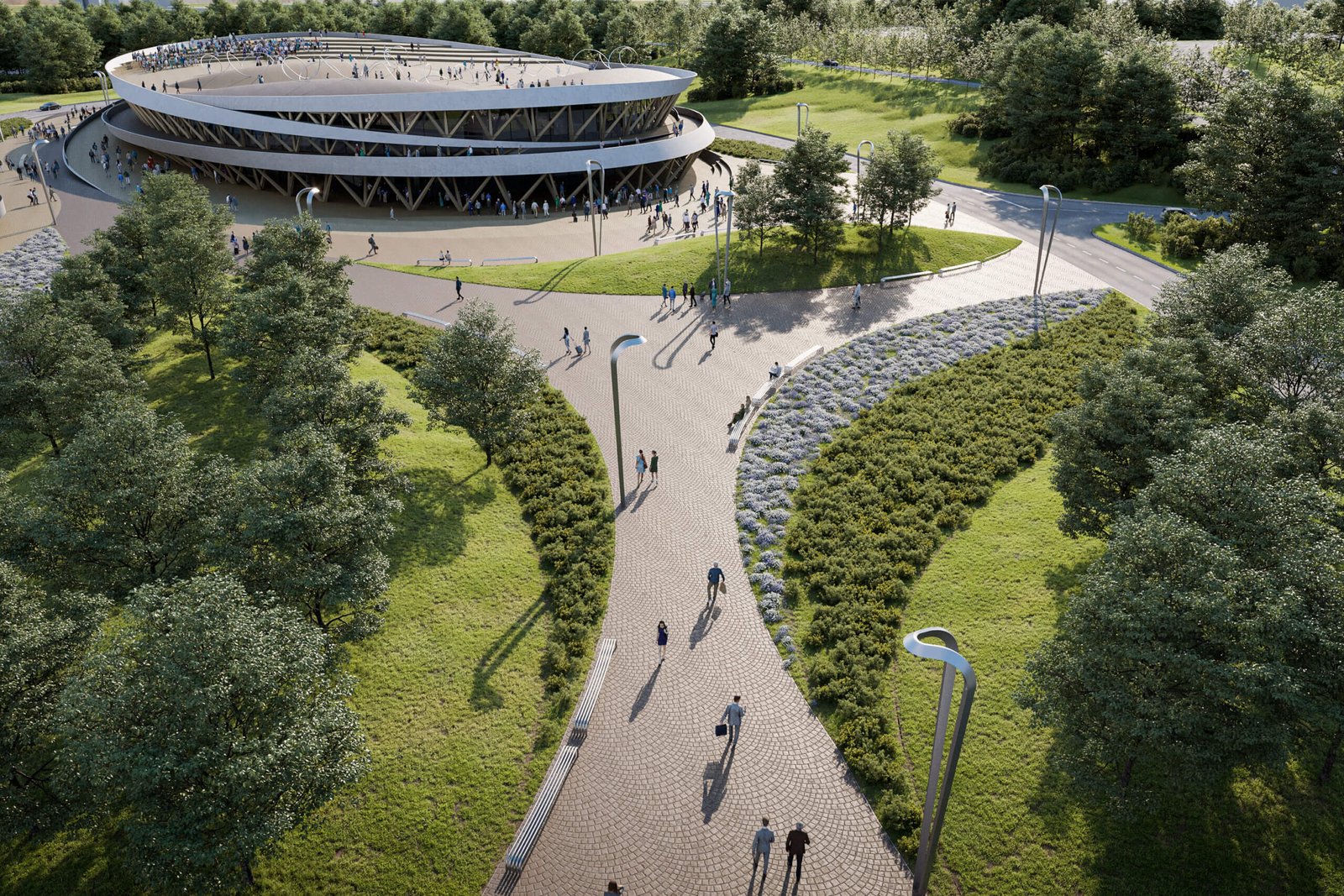
By placing the hall at the northeast edge of the site, the project releases a large, uninterrupted public ground. This open field becomes a civic plaza free from vehicular traffic, operating as both an extension of the sports program and an everyday social space for the neighborhoods of Dardania and Kalabria. The plaza is articulated through a fluid interplay of hard and soft surfaces, generating a landscape that supports informal gathering, movement, and appropriation. Urban elements are integrated as part of the spatial composition rather than applied as accessories.
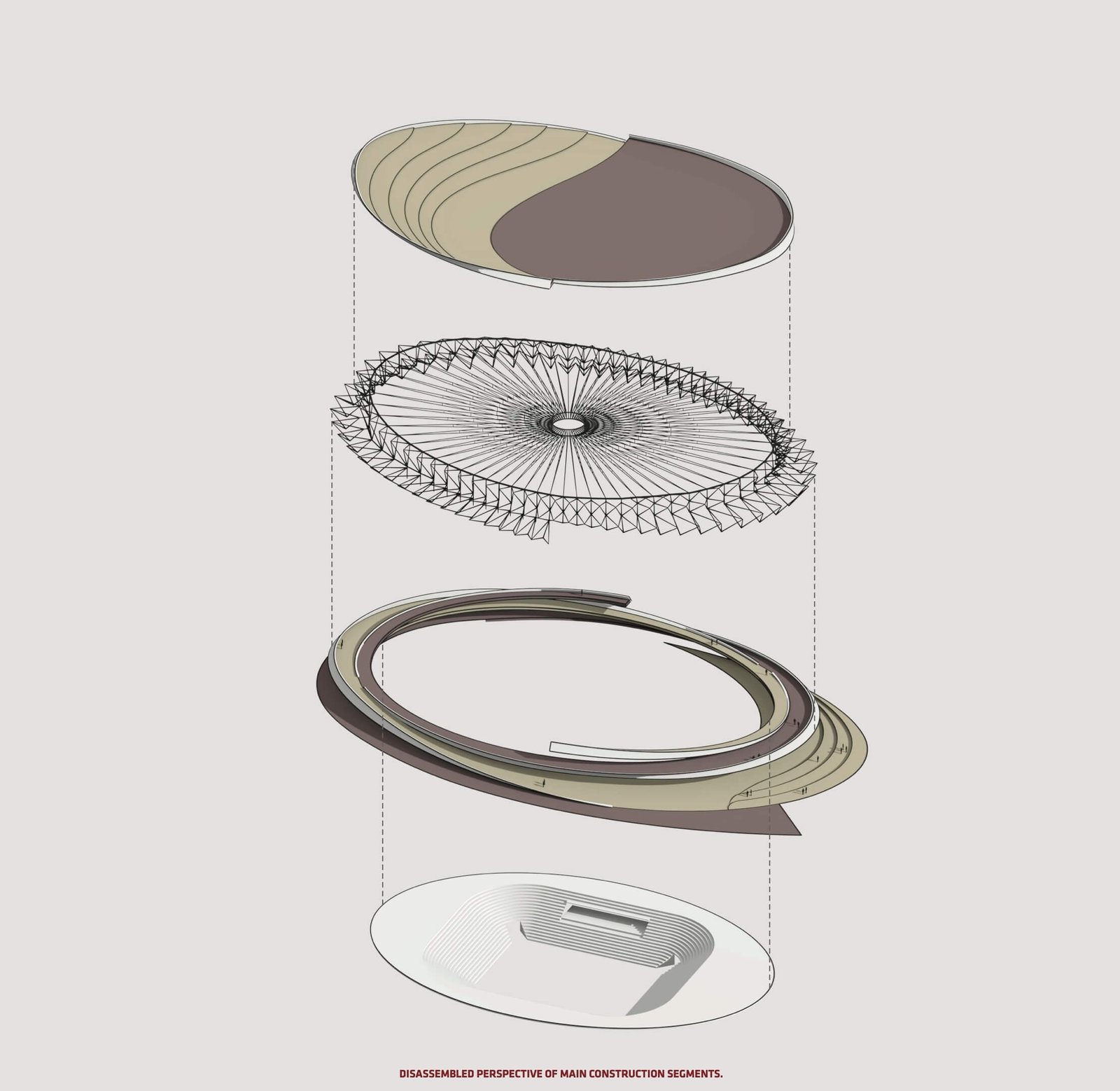
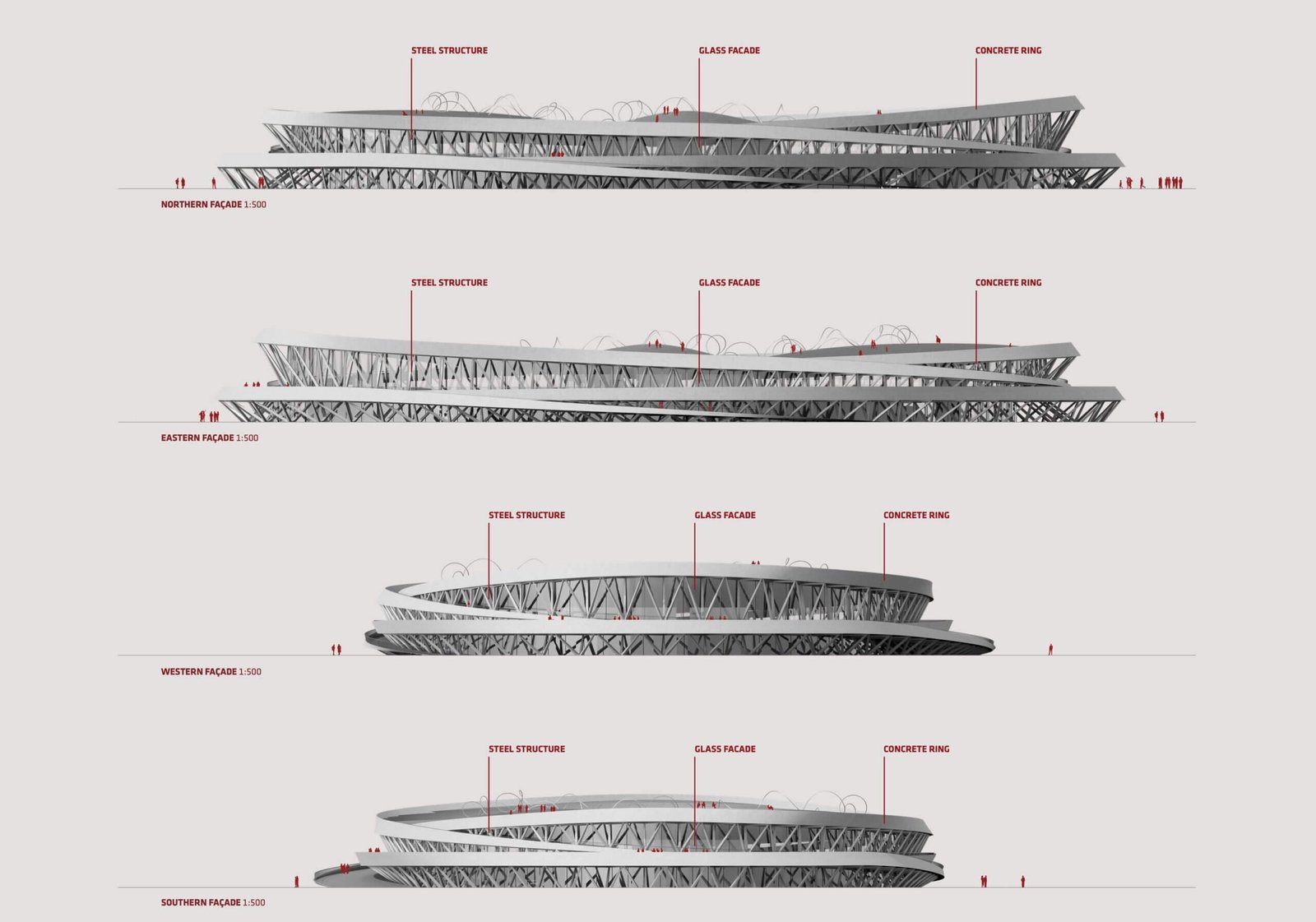
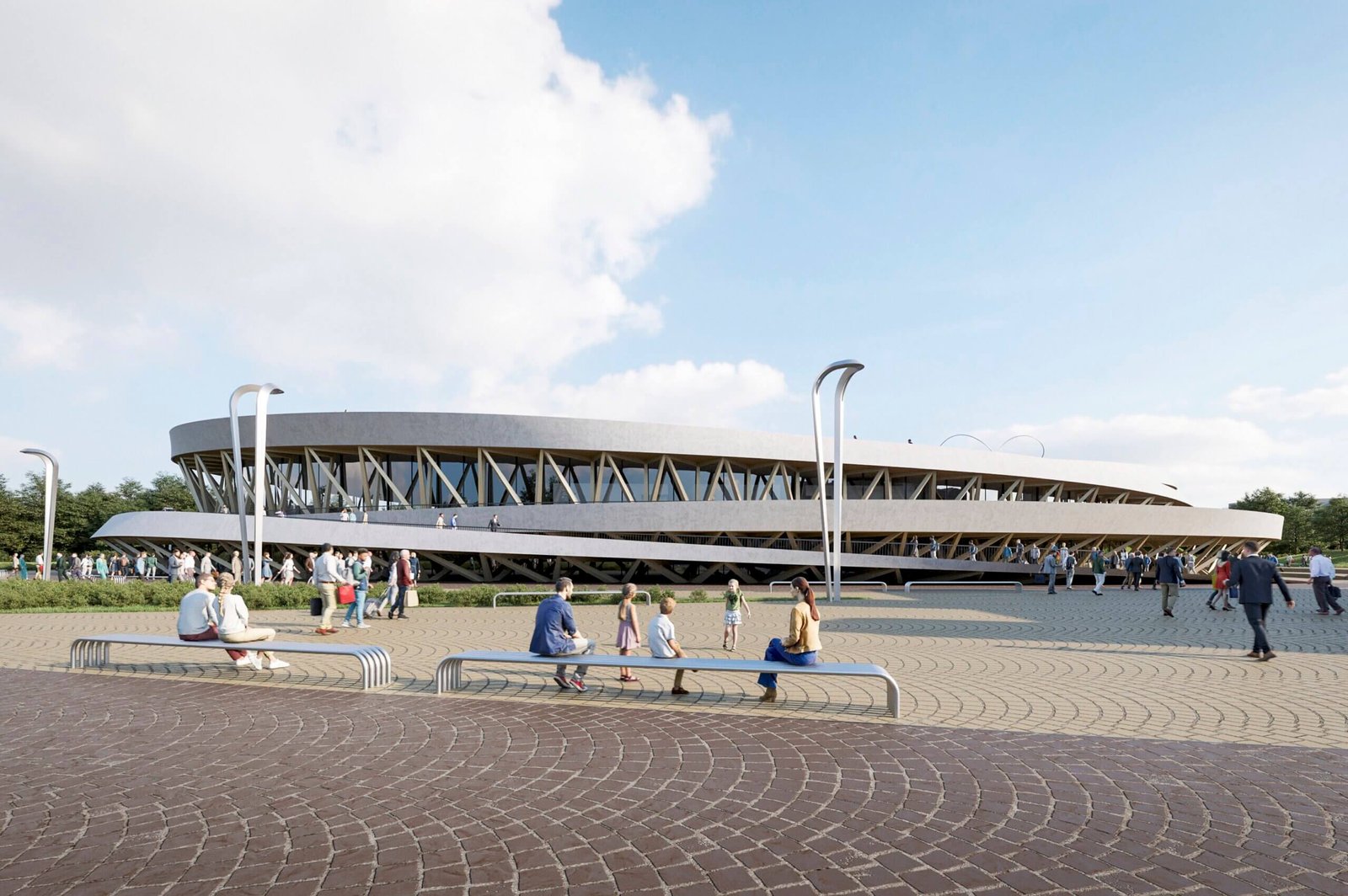
Rejecting the conventional image of the sports hall as a dominant, vertically exaggerated volume, the project reconsiders section as a primary design tool. By lowering the building by one level, all technical and service functions are absorbed into the ground, allowing the main concourse to align closely with the public realm. This strategy reduces the perceived scale of the hall and redefines its relationship to the surrounding city.
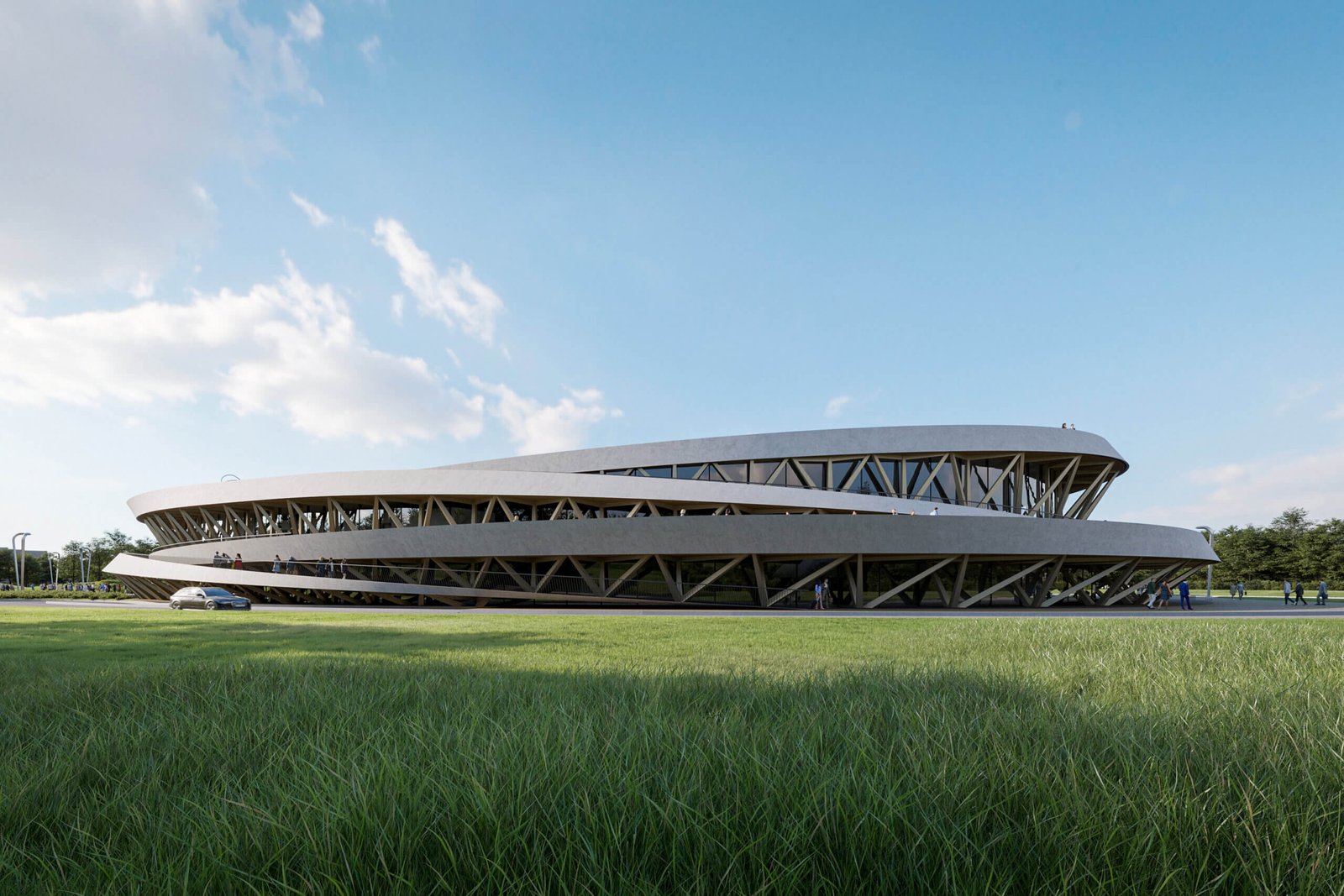
The roof, liberated from its purely technical role, becomes a new public plane. Positioned only two levels above ground, it is conceived as an accessible landscape—an elevated continuation of the plaza that offers views across Prishtina and reinforces the building’s civic presence. In this way, the sports hall operates simultaneously as infrastructure, building, and public space, blurring the boundaries between architecture, landscape, and urban life.